
Kitchen Fire Suppression Systems: Complete Guide to Types, Components & How They Work
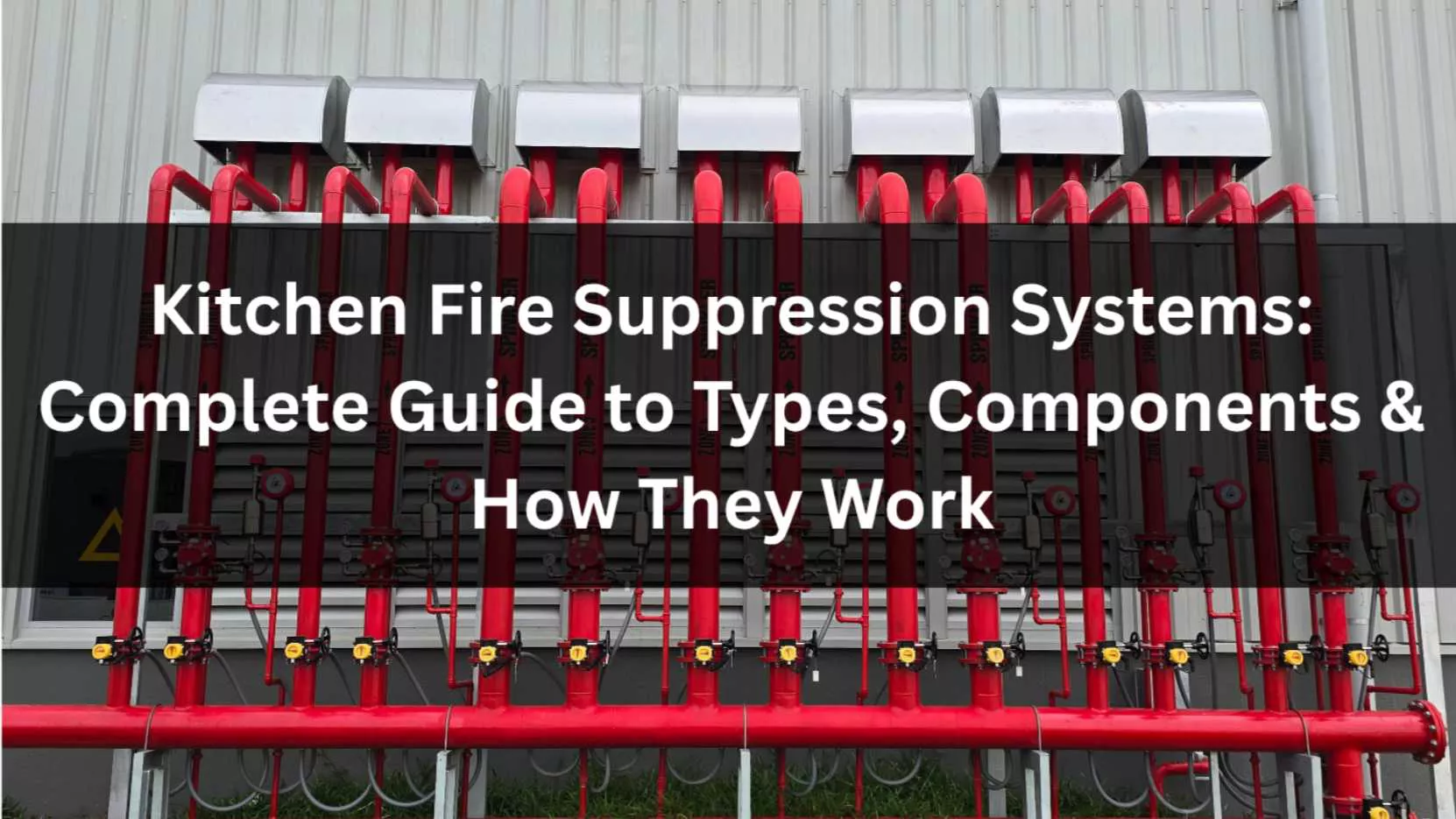
Kitchen fire suppression systems are a critical part of commercial kitchen fire protection. Restaurants, hotels, hospitals, schools, food-service facilities, and other commercial cooking environments combine high-temperature cooking equipment with grease, oil, fuel sources, electrical equipment, and exhaust systems. A fire that starts at a fryer, range, griddle, broiler, or other appliance can quickly spread into the kitchen hood, plenum, and grease exhaust duct if it is not controlled at an early stage.
Unlike general building fire protection, a commercial kitchen fire suppression system is designed around the specific hazards created by cooking operations. The system must protect the cooking appliances as well as the hood and exhaust path, while also coordinating with fuel and electrical shutoff functions. In many commercial applications, a properly designed system uses a wet chemical fire suppression agent specifically suited to high-temperature cooking oils and grease fires.
However, selecting a kitchen fire suppression system should involve more than choosing a cylinder and several discharge nozzles. Appliance type, cooking medium, hood configuration, duct arrangement, detection method, agent quantity, nozzle coverage, system listing, local fire codes, and maintenance requirements all affect the final design. This guide explains how kitchen fire suppression systems work, their main components, common system types, hood and duct protection, UL 300 considerations, installation requirements, maintenance, and key factors for choosing an application-specific commercial kitchen fire suppression solution.
What Is a Kitchen Fire Suppression System?
A kitchen fire suppression system is a fixed fire protection system designed to automatically detect and suppress fires associated with commercial cooking equipment. Unlike a portable fire extinguisher, it is permanently installed around the cooking line and exhaust hood, allowing it to respond automatically when a fire reaches the system's detection temperature.
A typical commercial kitchen system consists of a suppression agent container, detection mechanism, control or actuation assembly, distribution piping, discharge nozzles, manual activation equipment, and interfaces for shutting down gas or electrical power to protected cooking equipment. The exact configuration depends on the listed system design and the appliances being protected.
The main objective is not simply to extinguish visible flames above a cooking appliance. A properly engineered system must also address the areas through which a kitchen fire can spread, including the hood plenum and grease exhaust duct. Commercial kitchen fire protection therefore treats the cooking equipment and exhaust system as an integrated hazard.
Why Commercial Kitchens Present a Special Fire Risk
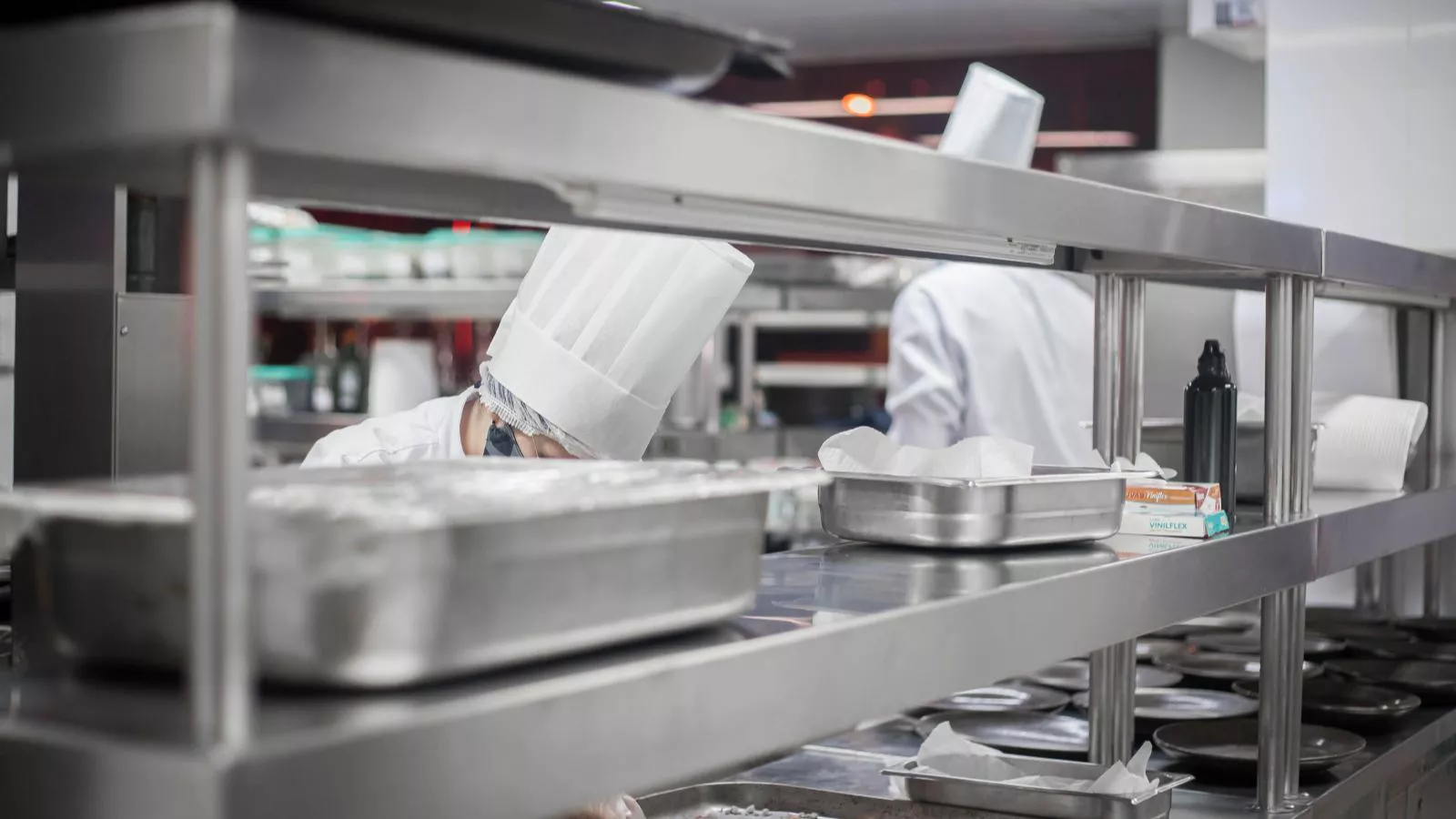
Commercial cooking operations generate a combination of heat, combustible cooking media, grease-laden vapors, fuel, and electrical energy. Cooking equipment can operate continuously for many hours, while grease and oil residues can accumulate in areas that are difficult to see or clean.
- High-temperature cooking oils: Deep fryers and other equipment can contain large quantities of heated cooking oil capable of sustaining intense fires.
- Grease accumulation: Grease-laden vapors can travel into the exhaust hood and duct system, creating additional fire spread pathways.
- Open flames and heating elements: Ranges, burners, grills, broilers, woks, and similar appliances operate at high temperatures.
- Gas and electrical energy: Cooking equipment may use natural gas, LPG, electricity, or combinations of these energy sources.
- Continuous operation: Commercial kitchens may operate for extended periods, increasing exposure to heat and combustible residues.
Because of these characteristics, commercial kitchens generally require dedicated fire protection rather than relying exclusively on general building fire sprinklers or portable extinguishers.
How Does a Kitchen Fire Suppression System Work?
Most modern commercial kitchen suppression systems use an automatic detection and actuation sequence. The system continuously monitors the protected cooking line through a heat-sensitive detection arrangement. When a predetermined activation condition is reached, the system releases the suppression agent through strategically positioned nozzles.
1. Heat Detection
The system uses heat-sensitive detection devices positioned within the hood or above the cooking equipment. Fusible links are commonly used in pre-engineered systems, although specific listed systems may employ other detection technologies.
The detection arrangement must correspond to the protected equipment and system listing. It is not sufficient to place a generic detector somewhere inside the hood. The location and temperature rating must be selected according to the approved design.
2. System Actuation
When the detection device reaches its activation condition, the system's actuation mechanism releases the stored suppression agent. Depending on the system design, activation may also initiate electrical signals or mechanical functions associated with fuel and equipment shutdown.
3. Fuel and Electrical Shutoff
A key part of commercial kitchen fire protection is removing the energy source that is feeding the fire. System activation can be connected to automatic shutoff mechanisms for gas or electrical cooking equipment where required by the applicable design and code.
This function helps prevent continued heating or fuel flow after the suppression agent has been discharged. The exact interlock arrangement should be coordinated with the kitchen equipment, electrical system, fuel system, and applicable local requirements.
4. Wet Chemical Discharge
The suppression agent is distributed through dedicated piping to nozzles installed over the protected cooking appliances and, where required by the listed design, within the hood or exhaust system.
Wet chemical agents are formulated for cooking fire hazards and can react with hot cooking oils to help form a stable surface layer while cooling the fuel. This combination of chemical reaction, vapor suppression, and cooling helps control the fire and reduce the risk of re-ignition.
5. Fire Suppression and Re-Ignition Prevention
The objective is not only rapid flame knockdown but also continued control of the cooking medium after visible flames disappear. High-temperature cooking oil can retain substantial heat, so the suppression system must be appropriate for the specific cooking hazard and designed according to its listing and applicable standards.
Main Components of a Kitchen Fire Suppression System
Although commercial kitchen suppression systems vary by manufacturer and application, most systems contain several fundamental components working together as a complete fire protection package.
Suppression Agent Cylinder or Tank
The agent container stores the wet chemical suppression agent required for the protected cooking line. Its capacity must be matched to the number and type of protected appliances, nozzle configuration, piping arrangement, and the specific listed system.
Detection Assembly
The detection assembly identifies excessive heat and initiates system actuation. In many pre-engineered systems, fusible links are connected through a mechanical detection line. The system must be installed according to the manufacturer's listed configuration.
Control or Actuation Mechanism
The actuation assembly translates the detection event into suppression-system operation. Depending on the design, it can also initiate alarm signals and equipment shutdown functions.
Distribution Piping
Distribution piping transports the suppression agent from the storage cylinder to individual discharge nozzles. Pipe routing, equivalent length, fittings, elevation changes, and other design limitations must comply with the system's listing and installation requirements.
Discharge Nozzles
Nozzles are positioned to provide the required coverage over specific cooking appliances and protected hood or duct areas. Different appliances may require different nozzle configurations, making nozzle selection an important part of system design.
Manual Pull Station
A manual activation station allows kitchen personnel to discharge the suppression system when a fire is observed before automatic detection occurs. It should be positioned in an accessible location appropriate to the kitchen layout and applicable fire code requirements.
Fuel and Electrical Interlocks
The suppression system may be integrated with gas valves, electrical disconnects, cooking equipment controls, fire alarm systems, or other safety interlocks. These interfaces help remove ignition and energy sources when suppression is activated.
What Areas Does a Kitchen Fire Suppression System Protect?
A common misunderstanding is that a kitchen suppression system only protects the surface of the fryer or cooking appliance. In reality, commercial kitchen fire protection must consider the complete fire path from the cooking equipment into the exhaust system.
| Protected Area | Fire Risk | Protection Objective |
|---|---|---|
| Cooking Appliances | Oil, grease, gas, high-temperature surfaces | Rapidly suppress flames at the source |
| Hood Plenum | Grease-laden vapors and accumulated residues | Prevent fire from entering the exhaust pathway |
| Exhaust Duct | Grease deposits and flame propagation | Control fire spread through the exhaust system |
| Fuel Supply | Continued gas or fuel flow | Automatically interrupt the energy source when required |
| Electrical Equipment | Electrical heating and equipment operation | Coordinate appropriate electrical shutdown functions |
Cooking Appliance Protection
The cooking appliances are normally the primary hazard area. Nozzles must be positioned according to the equipment configuration and the suppression system's listed design.
Typical protected equipment may include deep fryers, ranges, griddles, charbroilers, woks, hot plates, broilers, and other commercial cooking appliances. The final nozzle arrangement depends on the equipment model, dimensions, cooking medium, hood configuration, and system listing.
Kitchen Hood and Plenum Protection
The hood captures grease-laden vapors produced during cooking. If a cooking fire reaches the hood, accumulated grease can become a pathway for continued combustion.
For this reason, commercial kitchen suppression designs commonly incorporate protection for the hood plenum and related exhaust areas in accordance with the applicable listed system and code requirements.
Grease Exhaust Duct Protection
The exhaust duct represents another potential route for fire propagation. Grease deposits inside the duct can support fire spread away from the original cooking appliance.
A complete kitchen hood fire suppression system therefore needs to consider the duct configuration, access, nozzle placement, and exhaust system design rather than treating the cooking surface as an isolated hazard.
Types of Kitchen Fire Suppression Systems
Different fire suppression technologies can be used in cooking environments, but the appropriate choice depends on the type of cooking operation, protected equipment, system listing, local regulations, and project requirements.
1. Wet Chemical Kitchen Fire Suppression Systems
Wet chemical systems are widely associated with modern commercial kitchen fire protection. They use a liquid chemical agent specifically formulated for cooking-related hazards, including high-temperature cooking oils and grease.
When discharged onto a hot cooking oil fire, the agent can produce a surface layer while simultaneously providing cooling. This helps suppress flames and reduce the likelihood of re-ignition.
- Primary application: Commercial cooking equipment and grease-producing operations.
- Key advantage: Specifically designed for high-temperature cooking media.
- Typical configuration: Agent cylinder, detection system, piping, appliance nozzles, hood/duct protection, and manual activation.
2. Dry Chemical Systems
Older commercial cooking installations may use dry chemical technology. However, modern commercial cooking operations are generally designed around systems tested and listed for the relevant cooking hazards and current applicable requirements.
When evaluating an existing installation, the system should be reviewed against the current requirements applicable to the facility rather than assuming that an older dry chemical configuration remains appropriate after cooking equipment or cooking media changes.
3. Water-Based Fire Suppression Systems
Water-based fire protection can provide important building-level protection and may be used in specific listed cooking applications. However, ordinary building sprinklers should not automatically be considered a substitute for a dedicated commercial kitchen suppression system designed for cooking-oil hazards.
The distinction is important because a sprinkler system and a kitchen hood suppression system have different design objectives, discharge arrangements, activation characteristics, and protected hazards.
4. Specialized or Integrated Kitchen Fire Protection Systems
Some commercial kitchens use specialized cooking equipment with integrated fire protection or specially listed systems. These may be relevant for compact cooking appliances, self-contained cooking systems, food trucks, mobile kitchens, or specialized food-service equipment.
The important principle is that the suppression system should be selected based on the actual equipment and the applicable listing rather than simply choosing an agent based on the kitchen size.
Wet Chemical vs. Other Kitchen Fire Protection Methods
The following comparison helps explain why different fire protection technologies serve different roles in a commercial kitchen.
| Factor | Wet Chemical Suppression | Building Sprinkler | Portable Class K Extinguisher | Dry Chemical System |
|---|---|---|---|---|
| Primary Purpose | Fixed suppression of cooking hazards | General building fire protection | Manual first-response suppression | Specific listed fire hazards |
| Automatic Operation | Yes | Yes | No | Depending on system |
| Cooking Oil Protection | Specifically designed for suitable cooking hazards | Not a direct substitute for dedicated kitchen suppression | Designed for manual response to cooking media fires | Depends on listing and agent |
| Hood/Duct Integration | Yes, where required by system design | Separate building protection role | No | Depending on system |
| Fuel Shutdown Integration | Common system function | Not normally the primary function | Manual response | Depending on installation |
These systems should be considered complementary rather than interchangeable. A commercial kitchen may require several layers of fire protection, including a dedicated hood suppression system, portable extinguishers, building fire sprinklers, alarm systems, and proper hood and duct cleaning.
What Is UL 300 and Why Does It Matter?
UL 300 is an important fire testing standard for pre-engineered commercial cooking fire-extinguishing systems. Its purpose is to evaluate whether a system can effectively suppress fires associated with modern commercial cooking operations.
Modern cooking equipment and cooking oils can create higher-temperature fire conditions than older systems were originally designed around. This is one reason why commercial kitchen fire protection has increasingly relied on wet chemical systems tested for the relevant cooking hazards.
UL guidance also emphasizes that commercial cooking fire-extinguishing systems must be appropriately listed and installed in accordance with applicable codes and the manufacturer's installation instructions.
UL 300 Is a System Performance Standard
UL 300 should not be understood simply as a label attached to a suppression cylinder. It relates to the performance of the complete pre-engineered suppression system for commercial cooking applications.
This means the protected appliance arrangement, nozzle configuration, agent quantity, piping arrangement, detection method, and other system components must remain within the manufacturer's listed design limitations.
Why Equipment Changes Matter
Changing a fryer, adding a griddle, moving cooking appliances, changing the cooking medium, or modifying the hood can affect the original suppression-system design. Existing systems should therefore be reviewed whenever the cooking line is significantly modified.
Local authorities may also have specific requirements for existing installations and upgrades. For example, current commercial kitchen requirements in San Francisco reference UL 300, NFPA 17A, and NFPA 96 for applicable kitchen hood and duct suppression systems.
NFPA 96 and Commercial Kitchen Fire Protection
NFPA 96 is an important standard for ventilation control and fire protection associated with commercial cooking operations. It addresses areas including cooking exhaust hoods, grease removal devices, exhaust ducts, and associated fire protection requirements.
For a commercial kitchen project, NFPA 96 should not be treated as an isolated equipment specification. The ventilation system, hood construction, grease containment, fire suppression, inspection, maintenance, and cleaning requirements need to work together.
The currently published NFPA 96 edition is the 2024 edition, although the edition adopted by the local jurisdiction can differ. Project teams should therefore confirm the applicable edition with the local AHJ before final system design.
NFPA 17A and Wet Chemical Systems
NFPA 17A addresses wet chemical extinguishing systems, including requirements associated with design, installation, operation, testing, and maintenance. It works alongside commercial kitchen ventilation and fire protection requirements rather than replacing them.
For this reason, commercial kitchen projects should evaluate the suppression system as part of a broader fire protection package rather than selecting the suppression equipment independently from the hood, appliances, fuel supply, and building fire protection system.
Which Kitchen Equipment Needs Fire Suppression Protection?
The exact protected appliances depend on the cooking operation and the system listing. Common commercial cooking equipment that may require dedicated suppression protection includes:
- Deep Fryers: High-temperature cooking oil creates a specialized fire hazard and requires an appropriate suppression method.
- Griddles: Grease and oil deposits can ignite on high-temperature cooking surfaces.
- Ranges: Gas or electric ranges can create ignition sources beneath grease-laden vapors.
- Charbroilers and Broilers: High radiant temperatures and grease accumulation can increase fire risk.
- Woks: High-temperature cooking and open flames create significant localized hazards.
- Hot Plates and Specialty Appliances: Protection depends on the appliance configuration and applicable system listing.
One of the most important design principles is that the suppression system should be designed for the actual appliance arrangement. A system that was originally designed for one cooking line should not automatically be assumed to remain compliant after equipment is moved or replaced.
Kitchen Hood Fire Suppression System Design Considerations
Designing a commercial kitchen hood fire suppression system requires more than calculating the kitchen's floor area. The system is generally designed around the cooking equipment and the exhaust hood configuration.
1. Cooking Equipment Type
The first step is identifying every appliance under the hood. Fryers, griddles, ranges, broilers, woks, and other equipment can have different heat profiles and suppression requirements.
2. Appliance Position and Dimensions
Nozzle placement is directly related to the location and dimensions of protected equipment. The designer should establish the final equipment layout before completing the suppression-system design.
3. Hood Configuration
The hood type, length, plenum arrangement, exhaust configuration, and duct layout all affect the overall fire protection design.
4. Detection Arrangement
Detection devices must be positioned where they can reliably respond to a developing cooking fire. Their temperature rating and installation location should follow the system manufacturer's listed requirements.
5. Agent Capacity
The amount of suppression agent required depends on the protected equipment, number of nozzles, piping configuration, and the specific listed system. A larger kitchen does not automatically mean that one larger cylinder is sufficient.
6. Fuel and Electrical Interfaces
Gas valves, electrical disconnects, cooking equipment controls, exhaust systems, and alarm systems may need to be coordinated with suppression-system activation.
7. Local Code and AHJ Requirements
Even when a system is technically suitable, the final installation must satisfy the requirements adopted by the local authority having jurisdiction. This may affect equipment listings, drawings, inspections, testing, signage, service intervals, and commissioning.
Kitchen Fire Suppression System Installation Process
A reliable commercial kitchen suppression project should be coordinated from the equipment layout stage rather than added after the kitchen has already been constructed.
| Stage | Main Activity | Key Output |
|---|---|---|
| 01. Site Assessment | Review cooking equipment, hood, duct, fuel and electrical systems | Defined fire hazard and project requirements |
| 02. System Design | Select system configuration, detection, nozzles and agent capacity | Application-specific suppression design |
| 03. Installation | Install cylinder, piping, detection system and discharge nozzles | Complete physical suppression system |
| 04. Interlock Connection | Connect fuel, electrical, alarm and related safety interfaces | Integrated fire safety operation |
| 05. Testing & Commissioning | Verify detection, actuation, alarm and shutdown functions | Commissioned system ready for operation |
For commercial projects, installation drawings and system documentation should clearly identify protected appliances, nozzle locations, piping arrangements, detection devices, manual activation points, and required shutdown interfaces. Local authorities may impose additional documentation and plan-submittal requirements.
Kitchen Fire Suppression System Inspection and Maintenance
Installing a suppression system is only the beginning of commercial kitchen fire protection. A system can lose its intended performance if nozzles become blocked, detection devices are damaged, agent levels are incorrect, equipment is moved, or the hood and duct system accumulates excessive grease.
Regular System Inspection
The suppression system should be inspected and serviced according to the applicable standard, local code, and manufacturer's requirements. Some jurisdictions require professional inspection at least every six months for commercial kitchen suppression systems. For example, current San Francisco fire-department guidance specifies service at least every six months and after system activation.
Hood and Duct Cleaning
Fire suppression and kitchen exhaust cleaning are closely connected. Grease accumulation inside the hood and duct can increase the fuel available to a fire and undermine the overall fire protection strategy.
Cleaning frequency depends on cooking volume, equipment type, cooking processes, and applicable requirements. High-volume operations and kitchens using solid fuels may require more frequent cleaning than lower-volume operations.
After System Discharge
After a suppression system activates, the system should not simply be reset and returned to service. The cause of activation should be investigated, the system should be inspected, discharged agent should be replenished, detection components and other affected parts should be checked, and the installation should be restored according to the manufacturer's procedures and local requirements.
Equipment Modification
Whenever cooking appliances are added, removed, replaced, or repositioned, the suppression system should be reviewed. Even a relatively small change in the cooking line can alter nozzle coverage or the hazard profile.
Common Kitchen Fire Suppression System Problems
Many commercial kitchen fire protection problems are caused not by the basic suppression technology but by incorrect application, modifications, poor maintenance, or a lack of coordination between the kitchen equipment and the fire protection system.
- Appliances moved after installation: The original nozzle arrangement may no longer correspond to the equipment layout.
- New cooking equipment added: Additional appliances may require additional protection.
- Blocked discharge nozzles: Grease or foreign material can interfere with agent discharge.
- Damaged detection components: Detection lines or fusible links may be affected during hood cleaning or kitchen maintenance.
- Incorrect fuel interlock: Gas or electrical shutdown may not operate correctly if the interface is improperly installed or modified.
- Insufficient hood cleaning: Heavy grease accumulation increases the combustible load in the exhaust system.
- Outdated suppression equipment: Older systems may require assessment or upgrading to meet current requirements.
How to Choose a Kitchen Fire Suppression System
Selecting a commercial kitchen fire suppression system should begin with the cooking process and protected equipment rather than with the agent cylinder alone. The following factors can help project owners, kitchen-equipment manufacturers, EPC contractors, and fire protection engineers evaluate a suitable solution.
1. Identify the Cooking Hazard
Determine whether the kitchen primarily uses deep frying, grilling, wok cooking, broiling, baking, ranges, or other processes. Identify the cooking medium and the temperatures involved.
2. Map Every Protected Appliance
Prepare a detailed equipment schedule showing appliance type, dimensions, location, fuel source, and operating conditions. This information forms the basis for determining the required suppression coverage.
3. Review the Hood and Exhaust Configuration
The hood length, plenum, grease removal components, duct arrangement, and exhaust fan configuration should be considered together with the suppression system.
4. Verify System Listing and Certification
For commercial cooking applications, buyers should verify that the selected suppression system is appropriately listed for the intended application and meets the requirements adopted by the project jurisdiction. UL 300 is particularly important for pre-engineered commercial kitchen fire-extinguishing systems.
5. Consider Fuel and Electrical Shutdown
Confirm how system activation will interact with gas valves, electrical power, cooking equipment, exhaust systems, alarms, and emergency controls.
6. Evaluate Installation and Service Support
A reliable supplier should be able to provide technical documentation, installation guidance, system configuration support, testing procedures, spare parts, and after-sales service.
7. Confirm Local AHJ Requirements
Fire codes are adopted and enforced locally. Before purchasing or finalizing a system, confirm the applicable requirements with the project's authority having jurisdiction, especially for new construction, renovation, or system replacement.
Kitchen Fire Suppression Systems for Different Commercial Applications
Commercial cooking environments vary significantly. A small restaurant kitchen, hotel banquet kitchen, hospital food-service facility, and large institutional kitchen may use different equipment arrangements and operating schedules.
Restaurants
Restaurants are one of the most common applications for kitchen hood suppression systems. Fryers, ranges, griddles, broilers, grills, and other cooking appliances can operate simultaneously during peak service periods.
The system should be designed around the actual cookline, including appliance spacing, hood configuration, exhaust duct, fuel supply, and expected cooking processes.
Hotels and Catering Kitchens
Hotel kitchens and catering facilities may contain multiple cooking lines serving restaurants, banquet operations, room service, and large-scale food preparation. These environments can have complex hood and duct arrangements that require coordinated fire protection engineering.
Hospitals and Healthcare Facilities
Hospital kitchens can operate continuously and may serve large numbers of meals. Fire protection must be coordinated with building occupancy requirements, emergency procedures, ventilation, and facility operations.
Schools and Institutional Kitchens
Schools, universities, correctional facilities, and other institutional kitchens often combine large cooking volumes with strict operational and fire safety requirements. Equipment layout and suppression coverage should be reviewed whenever appliances are replaced or kitchen facilities are renovated.
Food Processing and Commercial Food-Service Facilities
Large food-service facilities can involve specialized cooking lines, continuous production, high-capacity exhaust systems, and automated equipment. These applications may require more customized fire protection engineering than a standard restaurant kitchen.
Kitchen Fire Suppression System vs. Fire Extinguishers
A fixed kitchen suppression system and a portable fire extinguisher perform different roles and should not be considered interchangeable.
A fixed kitchen fire suppression system provides automatic protection around the cooking equipment and exhaust system. It can detect and suppress a developing fire without requiring a person to reach the equipment first.
A portable Class K fire extinguisher, by contrast, is a manual response device intended for suitable cooking-media fires. It provides an additional layer of protection but does not replace the fixed hood suppression system where a dedicated system is required.
Commercial kitchens may therefore require both fixed suppression and portable extinguishers, together with the building's broader fire protection systems.
Kitchen Fire Suppression System vs. Building Sprinkler System
Building sprinklers and kitchen suppression systems are designed for different purposes. A building sprinkler system provides general fire protection throughout a structure, while a dedicated kitchen suppression system is engineered around cooking appliances and the associated hood and exhaust hazards.
| Feature | Kitchen Suppression System | Building Sprinkler System |
|---|---|---|
| Primary Hazard | Cooking appliances and exhaust system | General building fire hazards |
| Typical Agent | Wet chemical or other specifically listed agent | Water |
| Coverage | Appliances, hood, plenum and duct as applicable | Building spaces |
| Fuel Shutdown | Can be integrated into system operation | Not the primary function |
| Design Basis | Specific cooking equipment and listed system configuration | Building occupancy and fire hazard classification |
In a properly protected commercial facility, these systems can work together as multiple layers of fire protection rather than replacing one another.
Why Choose an Application-Specific Kitchen Fire Suppression Manufacturer?
For standard commercial kitchens, a listed pre-engineered system may provide an efficient solution. However, larger, more complex, or customized food-service projects can require closer coordination between the suppression system, kitchen equipment, hood manufacturer, ventilation contractor, electrical contractor, and fire protection engineer.
1. Complete Hazard Assessment
The manufacturer or system provider should understand the actual cooking hazards instead of selecting equipment based only on kitchen area or cylinder capacity.
2. Appliance-Specific Nozzle Configuration
Nozzle coverage should correspond to the actual protected equipment and the system's listed design limitations. This is particularly important when a kitchen contains multiple appliance types.
3. Hood and Duct Integration
The suppression design should consider the hood, plenum, grease removal devices, and exhaust duct rather than protecting only the visible cooking surfaces.
4. Control and Interlock Engineering
The supplier should understand how detection and suppression interact with gas shutoff, electrical controls, alarms, exhaust systems, and emergency procedures.
5. Testing and Documentation
Commercial projects may require detailed drawings, equipment schedules, system calculations, testing records, commissioning documentation, and maintenance records. A capable manufacturer should be able to support the project throughout these stages.
6. Lifecycle Support
Fire suppression equipment requires ongoing inspection, maintenance, replacement of certain components, and recharge after activation. Long-term technical support is therefore an important consideration when selecting a manufacturer.
Why JUAND for Kitchen Fire Safety Solutions?
Commercial kitchen fire protection is part of a broader industrial and application-specific fire safety strategy. JUAND focuses on engineering-oriented fire safety solutions designed around the actual hazards, operating conditions, and protected assets of each application.
Rather than treating fire suppression equipment as an isolated product, JUAND develops solutions around application requirements, including detection, suppression, control, system integration, and project-specific engineering.
This application-oriented approach is particularly valuable for projects where the fire protection system must coordinate with other safety systems or where standard equipment requires adaptation to the protected environment.
| JUAND Fire Safety Capability | Typical Application | Engineering Focus |
|---|---|---|
| Fire Safety of Power Grid | Power substations and electrical infrastructure | Detection, suppression and equipment safety integration |
| Fire Safety of Transportation | Vehicles, transportation equipment and enclosed machinery | Compact and application-specific fire protection |
| Fire Safety of BESS | Battery energy storage systems | Detection, suppression and thermal-risk management |
| Fire Safety of Aid & Rescue | Emergency response and rescue applications | Portable and rapid-response fire suppression |
| Fire Safety of Low Altitude Area | Low-altitude infrastructure and emerging transportation applications | Application-specific detection and suppression engineering |
For commercial kitchens and other specialized fire protection projects, JUAND can work with project owners, equipment manufacturers, EPC contractors, and fire safety professionals to evaluate the application and develop a suitable fire protection approach.
Conclusion
Choosing the right kitchen fire suppression system starts with understanding the actual cooking hazard. Commercial kitchens combine high-temperature cooking equipment, grease, cooking oils, fuel, electrical energy, and exhaust systems, creating a fire risk that requires specialized protection.
A properly designed commercial kitchen fire suppression system should consider the entire fire protection chain, from automatic heat detection and system actuation to wet chemical discharge, appliance coverage, hood and duct protection, fuel and electrical shutdown, and post-activation service.
For commercial projects, UL 300, NFPA 96, NFPA 17A, local fire codes, manufacturer listing requirements, and AHJ requirements should all be considered when selecting and installing the system. The exact requirements vary according to jurisdiction and application, so the final design should always be verified against the standards adopted for the project.
Whether you are developing a new restaurant kitchen, upgrading an existing hood system, designing a hotel or institutional kitchen, or looking for an application-specific commercial kitchen fire protection solution, JUAND can help evaluate your fire safety requirements and develop a suitable system solution.
Contact JUAND today to discuss your kitchen fire protection requirements, cooking equipment configuration, hood and duct arrangement, and project-specific suppression needs.
Frequently Asked Questions
1. What is a kitchen fire suppression system?
A kitchen fire suppression system is a fixed fire protection system designed to automatically detect and suppress fires involving commercial cooking equipment. It typically includes a suppression agent container, detection system, piping, discharge nozzles, manual activation, and related safety interlocks.
2. How does a commercial kitchen fire suppression system work?
A commercial kitchen suppression system detects excessive heat above protected cooking equipment and automatically activates the suppression system. The agent is discharged through strategically positioned nozzles to suppress the fire, while associated controls can shut off gas or electrical power where required by the system design.
3. What type of fire suppression system is used in commercial kitchens?
Modern commercial kitchens commonly use wet chemical fire suppression systems designed for cooking-related hazards. The exact system must be selected according to the cooking equipment, system listing, applicable codes, and local authority requirements.
4. What is a kitchen hood fire suppression system?
A kitchen hood fire suppression system is a fixed suppression system designed to protect commercial cooking appliances and associated areas of the exhaust hood. Depending on the listed design, protection can include the cooking appliances, hood plenum, and exhaust duct system.
5. Is UL 300 required for kitchen fire suppression systems?
UL 300 is an important testing standard for pre-engineered commercial cooking fire-extinguishing systems. Whether a particular system is required to be UL 300 listed depends on the applicable code, system type, installation, and jurisdiction. Project teams should verify the requirement with the local AHJ and applicable standards.
6. Does a kitchen fire suppression system replace a sprinkler system?
Generally, no. A dedicated kitchen suppression system and a building sprinkler system serve different fire protection purposes. The kitchen system is designed specifically around cooking equipment and the exhaust system, while building sprinklers provide broader building fire protection.
7. How often should a kitchen fire suppression system be inspected?
Inspection frequency depends on the applicable fire code, standard, manufacturer's requirements, and local jurisdiction. Some jurisdictions require commercial kitchen suppression systems to be professionally serviced at least every six months and after activation. Always confirm the requirements applicable to your installation.
8. What happens if kitchen equipment is moved after installation?
Moving or replacing cooking equipment can change the required nozzle coverage and suppression-system configuration. The system should therefore be reviewed whenever protected appliances are moved, replaced, added, or significantly modified.
9. Can one kitchen suppression system protect multiple appliances?
Yes. A properly designed system can protect multiple cooking appliances within its listed design limitations. The number and type of appliances, nozzle arrangement, agent capacity, piping configuration, and hood layout must all be considered when determining the appropriate system.
10. How do I choose a kitchen fire suppression system manufacturer?
Evaluate the manufacturer's experience with commercial cooking hazards, system listings and certifications, engineering capability, nozzle and piping design, hood and duct integration, control interfaces, testing documentation, installation support, spare parts, and after-sales service. The best solution should be selected according to the actual kitchen configuration rather than equipment price alone.

